Brick Repair and Replacement in Scranton, PA
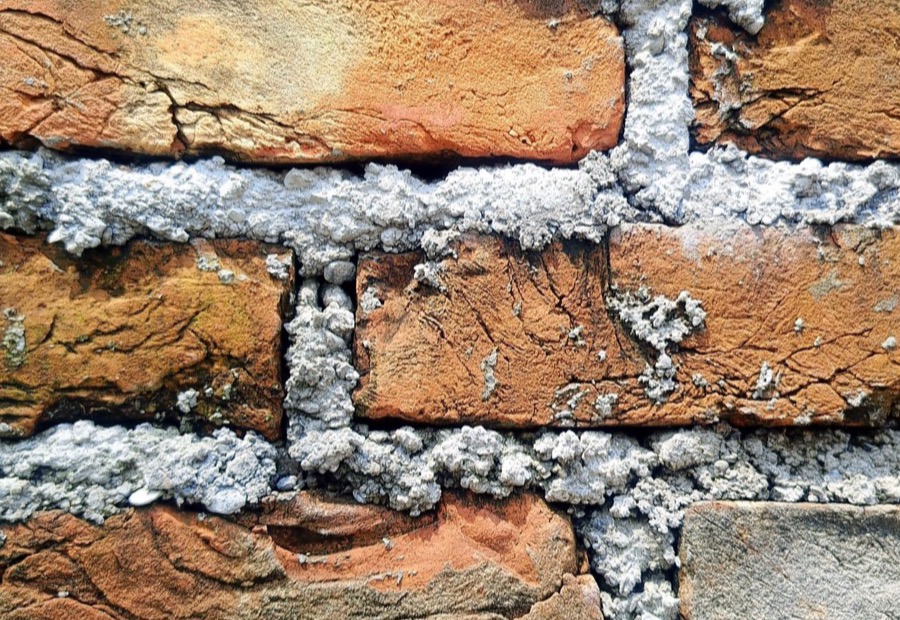
Brick fails in Scranton mostly one way: it spalls. Water gets into the brick, freezes, expands, and blows the face off. Freeze-thaw spalling is the brick problem the old blocks here actually have, one winter after the next, and it is the one we answer most. We cut failed brick out and set matched units back in, and we read the wall to find why it failed to begin with.
Spalling and Freeze-Thaw
A brick has a hard fired face and a softer body behind it. When water works past the face and freezes, the ice takes up more room than the water did and pops the face off, in flakes or a whole broken slab. Now the soft body is bare, and it drinks water faster than the face ever allowed. So one spalled brick becomes a patch, and a patch becomes a wall. Catch it early and the repair stays small.
Efflorescence Is a Symptom
The white bloom on a brick wall is efflorescence, salt left behind after water passes through the masonry and dries on the surface. It is not just a stain to scrub off. It is the wall telling you water is moving through it, from an open joint, a bad crown, a failed sill, or ground moisture wicking up from the foundation. We treat efflorescence as a signal and trace the water before we touch the face.
Cutting Out and Replacing Brick
We cut the failed brick out without loosening the sound brick around it, clean the pocket back to solid mortar, and set the replacement in fresh mortar tooled to match the wall. The pocket has to be square and clean so the new unit beds on a full seat. Rushed, this is exactly where a repair works the good brick loose. Done right, the replaced units carry load like the rest of the wall.
Matching and Salvaging Brick
The hard part is the match. A century-old brick has a size, a color, and a texture that a modern stock brick may miss. Sometimes a current brick is close enough. Sometimes the only true match is salvaged brick from the same era, pulled off a demolished wall of the same vintage. We source the closest match we can find and lay it so the repair disappears into the original.
Bulging and Bowing Walls
A wall that bulges or leans has lost its bond to the structure behind it. The brick face is no longer tied back, and it will not draw itself flat again. This is past repointing. Depending on how far it has moved and whether it is still anchored, the answer is a rebuild in sections or a full take-down and relay. We check the tie between the face and the wall behind it before we call it.
What It Costs
Spot brick replacement runs about $20 to $50 per brick, more when the unit has to be salvaged or closely matched. A larger spalled area or a section of wall is priced by the scope once we see it. Access and matching move the number most. Every job gets a free look and a written estimate before any brick comes out.
Seeing flaking faces or white bloom on your brick? (570) 555-0148 gets you a free estimate. Once the brick is sound we can talk about a breathable sealer to slow the next round.
Why is my brick crumbling and flaking?
That is spalling. Water soaks into the brick, freezes, expands, and shoves the face off. Northeastern Pennsylvania winters cycle through freeze and thaw all season, and each pass drives it a little further. Once the hard outer face is gone, the softer brick behind it takes on water faster, so spalling spreads across a wall if it is left to run.
Can you replace just a few bricks?
Yes. We cut the spalled or cracked units out, clean the pocket, set matched brick in fresh mortar, and repoint around the repair. The skill is in the match. A replacement brick has to line up with a unit that may be a hundred years old in size, color, and texture, so the patch does not announce itself.
What causes the white staining on my brick?
Efflorescence. It is salt carried to the surface by water moving through the wall, dropped there when the water dries off. It washes or brushes away, but it keeps coming back until the water path is closed. The stain is a symptom. The real work is finding where the water is getting in and stopping it.
My brick wall is bulging outward. Is that serious?
It can be. A bulging or bowing wall has lost the bond between the brick face and the structure behind it, and it does not straighten on its own. Some walls are stable enough to rebuild in sections; others have to come down and be relaid. We assess how far it has moved and whether it is still tied to the building before we recommend anything.